By PDS Team
There is no ranking list to climb in ChatGPT, Gemini or Perplexity. These tools search the web, read pages and cite the sources they use, so being mentioned comes down to three things: crawlers can reach your pages, your pages clearly answer the question, and other trusted sources say the same things about your business. If you have been searching for how to rank in ChatGPT, this guide covers what each platform officially says about sources and what you can control.
No one can guarantee a mention in an AI answer. What you can do is remove the reasons you would be left out.
How do ChatGPT, Gemini and Perplexity choose their sources?
All three search the web when a question needs current information, then show links to the pages they relied on, but none of them publishes a detailed ranking formula.
ChatGPT
OpenAI’s help article on ChatGPT search says ChatGPT will automatically search the web when a question might benefit from web information, and answers include inline citations and a Sources button. It also says ChatGPT may share disassociated search queries with third-party search providers such as Bing. OpenAI’s publisher FAQ says any public website can appear in ChatGPT search, as long as it is not blocking OAI-SearchBot.
Gemini
Google’s Gemini Apps help says Gemini may provide links to sources and related content, and that not all responses include them. Google’s crawler documentation describes grounding as providing content from the Google Search index to the model at prompt time. In practice, being well indexed in Google Search is the foundation for Gemini too.
Perplexity
Perplexity’s help centre says it searches the internet and gathers information from sources such as articles, websites and journals, and each answer includes numbered citations linking to the original sources. Its crawler documentation says PerplexityBot is what surfaces and links websites in its results.
If you would like a team to work on this for you, our GEO services focus on making your business easy for AI search tools to find, understand and cite.
Step 1: Can AI search crawlers reach your pages?
Check that each platform’s search crawler is allowed in robots.txt and not blocked by your firewall, because a page that cannot be fetched cannot be cited.
| Platform | Crawler that powers citations | What its docs say |
|---|---|---|
| ChatGPT | OAI-SearchBot | Sites opted out will not be shown in ChatGPT search answers |
| Gemini / Google AI features | Googlebot (Search index) | Google-Extended controls Gemini grounding, not Google Search |
| Perplexity | PerplexityBot | Allow it in robots.txt to appear in search results |
| Claude | Claude-SearchBot | Blocking it may reduce visibility in Claude’s search results |
| Microsoft Copilot | Bingbot | Bing says it respects robots.txt and other supported controls |
Note that Google-Extended is the exception worth thinking about. Google says blocking it stops your content being used for Gemini grounding, so a site that blocks Google-Extended may be cited less in the Gemini app, even though Google Search is unaffected.
Also test from outside your network. Security plugins and CDNs sometimes challenge unfamiliar bots with a CAPTCHA, which quietly blocks them even when robots.txt allows them.
Step 2: Are you indexed in Google and Bing?
Make sure your important pages are indexed in both Google and Bing, since AI answers lean on search indexes and OpenAI names Bing as a search provider.
Verify your site in Google Search Console and Bing Webmaster Tools, submit a sitemap to both and fix any pages reported as not indexed. Bing has said that IndexNow helps keep information fresh across search and AI experiences by notifying participating search engines when pages are added, changed or removed.
Bing Webmaster Tools also added an AI Performance report, released as a public preview in February 2026. Bing says it shows how often your pages are cited as sources in Microsoft Copilot, AI-generated summaries in Bing and select partner integrations. Bing notes that citation counts do not indicate ranking or authority, so use the report to spot which pages get cited and which do not.
OpenAI has not officially said that Bing Webmaster Tools data affects ChatGPT, so treat Bing indexing as good hygiene, not a shortcut.
Step 3: Do your pages answer real questions clearly?
Write pages that give a direct, specific answer early and back it up with detail, because AI tools quote passages that state facts plainly.
Google’s guide to optimising for generative AI features says its AI features rely on the same core ranking and quality systems as Search. It recommends original, expert-led content that goes beyond common knowledge, and warns against mass-producing pages for every query variation. It also says there is no need to break content into tiny pieces for AI.
Bing’s AI Performance announcement suggests clear headings, tables and FAQ sections so key facts are easy to extract, supported by examples, data and sources.
What this looks like for a service business
- A dedicated page for each service, stating what you do, who it is for and where you work.
- Plain facts AI tools can repeat accurately: locations, opening hours, service areas, contact details.
- Answers to the questions customers actually ask your sales team, written in their words.
- Dates on content that changes, and regular reviews so old details are corrected.
Our explainer on generative engine optimisation goes deeper into how this differs from classic SEO.
Step 4: Are other sources saying the same thing about you?
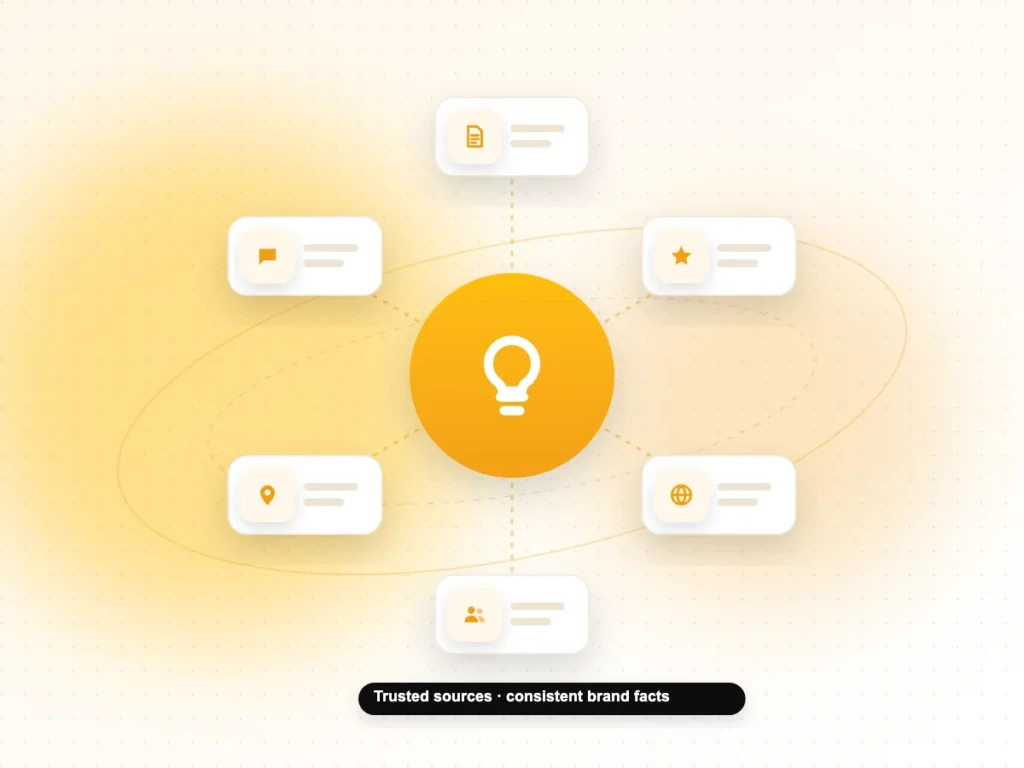
AI answers often draw on several sources, so consistent, genuine mentions of your business across the web make it easier for them to describe you accurately.
Start with the profiles you control. Google’s AI optimisation guide advises keeping business data current through Google Business Profile and Merchant Center, and Bing recommends Bing Places for Business for address, hours and contact details. Make sure your name, address and phone number match everywhere.
Beyond that, earn mentions the normal way: industry directories that are relevant to you, local news, partner websites, and real customer reviews. Google’s guide specifically lists seeking inauthentic mentions among the tactics to ignore. Google’s spam policies also cover buying links to manipulate rankings.
Step 5: How do you measure AI search visibility?
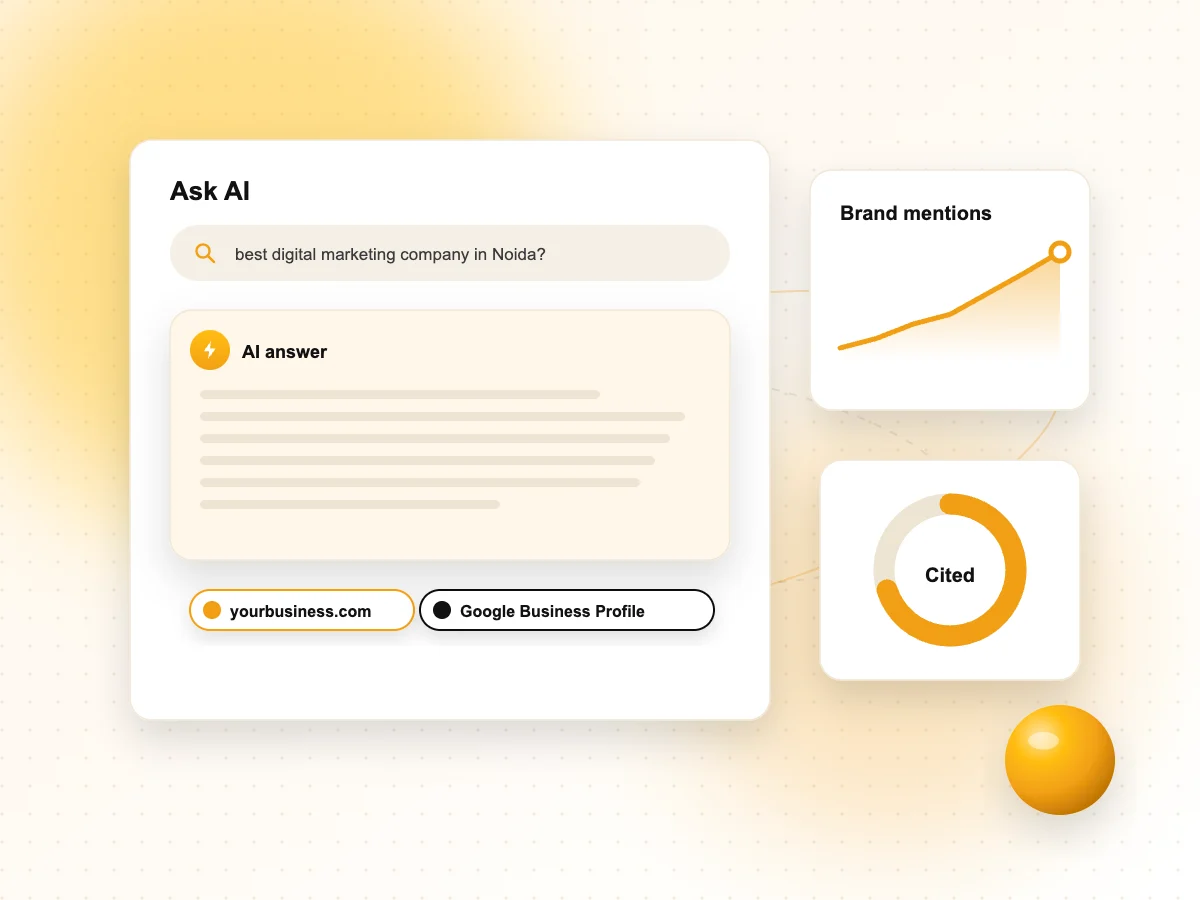
Track referral traffic from AI tools in analytics and check how your brand is described in answers to your key questions.
- Referral traffic: OpenAI says ChatGPT adds
utm_source=chatgpt.comto referral links, so you can see that traffic in Google Analytics. - Citation reports: Bing Webmaster Tools’ AI Performance report shows citations across Microsoft’s AI experiences.
- Manual checks: Each month, ask ChatGPT, Gemini and Perplexity the questions your customers ask, and note whether you are mentioned and whether the details are correct.
Answers change between sessions and users, so look for patterns over time rather than reacting to one response. An AI visibility audit can give you a baseline to measure against.
How to rank in ChatGPT and other AI tools: FAQs
Can I pay to be mentioned in ChatGPT answers?
OpenAI’s publisher guidance does not describe any paid way to be cited in ChatGPT search answers. It says any public website can appear, provided OAI-SearchBot is not blocked. Be wary of services that promise guaranteed mentions. Focus on crawler access, clear pages and genuine coverage of your business instead.
Does ChatGPT use Google or Bing results?
OpenAI’s help page says ChatGPT may share disassociated search queries with third-party search providers such as Bing. It does not publish the full list of providers or how results are combined. Being indexed in both Bing and Google is a sensible baseline for any business that wants to be found in AI search.
Is GEO different from SEO?
They overlap heavily. Google says its AI features use the same core ranking and quality systems as Search, so good SEO is the foundation. GEO adds checks specific to AI tools, such as allowing their search crawlers, making facts easy to quote and monitoring how your brand is described in AI answers.
Why does ChatGPT give wrong information about my business?
Usually because the sources it finds are outdated or disagree with each other. Update your website first, then your Google Business Profile, Bing Places listing and key directories so every source shows the same details. Once the sources agree, AI answers have a better chance of repeating the right details.
Do I need llms.txt to appear in AI answers?
Not for Google. Google’s guide to generative AI features says Google Search does not use llms.txt files and that they neither help nor harm rankings. Other platforms have not made it a requirement in their official docs. Correct robots.txt rules and clear pages matter far more.
How long does it take to start appearing in AI answers?
There is no fixed timeline. Crawler changes can apply within about a day on some platforms, but being cited depends on whether your pages are indexed and judged useful for a question. Building helpful content and genuine mentions is ongoing work, so review progress over months, not days.
Need help getting cited in AI answers?
If you want your business to show up accurately in ChatGPT, Gemini and Perplexity, our GEO services cover crawler access, content and monitoring. We work with businesses in Noida, Delhi NCR and across India. Contact our team to discuss your goals.
References
- OpenAI Help: Searching the web with ChatGPT
- OpenAI Help: Publishers and Developers FAQ
- Gemini Apps Help: View related sources and double-check responses
- Perplexity Help Center: How does Perplexity work?
- Google Search Central: Optimizing for generative AI features in Search
- Bing Webmaster Blog: Introducing AI Performance in Bing Webmaster Tools